


FREE DELIVERY ON ORDERS OVER £25
ALWAYS UP TO 70% OFF RRP
SIGN UP FOR OFFERS AND EXCLUSIVES
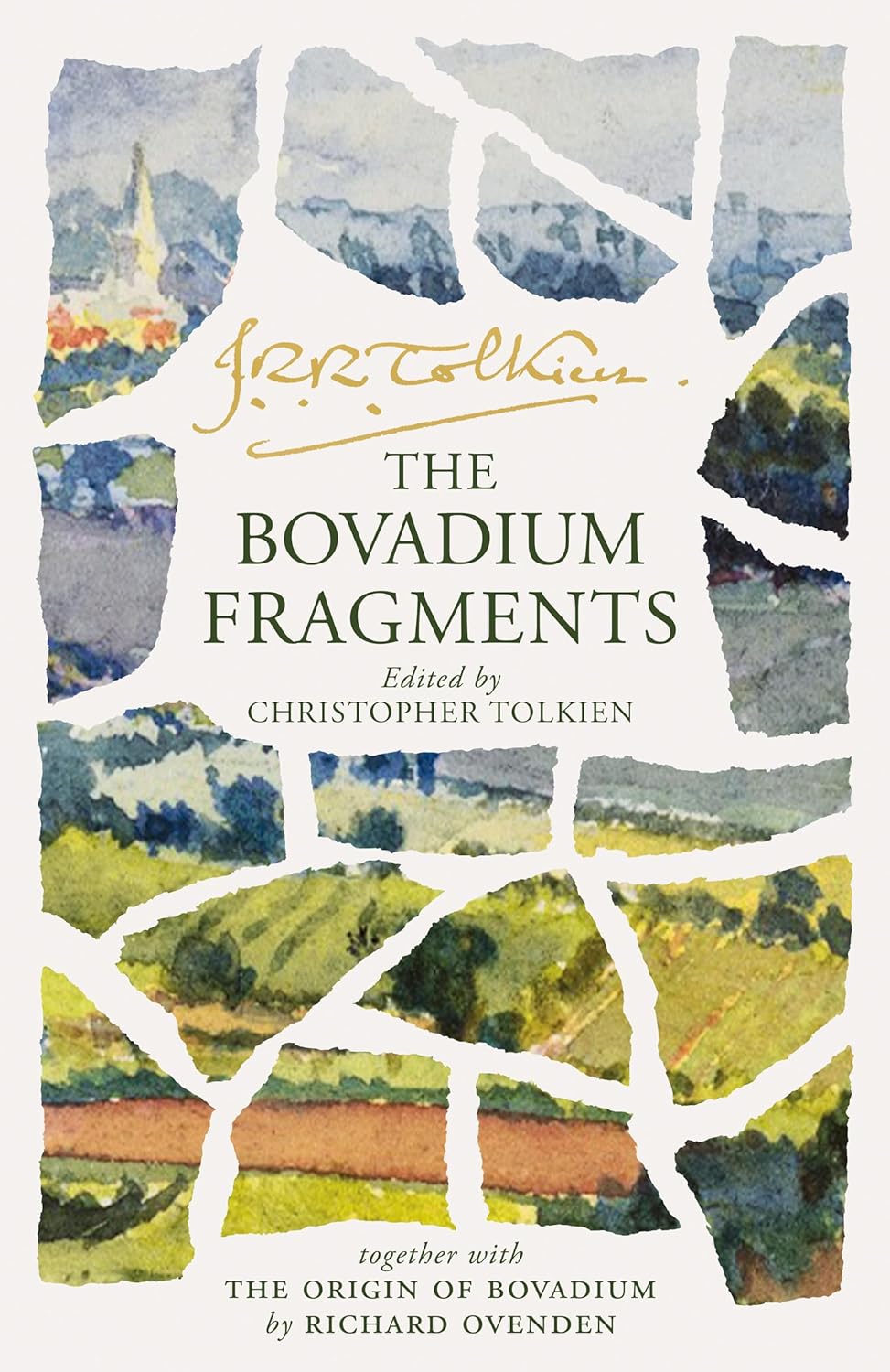
The Bovadium Fragments (Hardback)
J. R. R. Tolkien (Author)
- £12.00
-
£20.00 - £12.00
- Unit price
- per
Save £8.00
Please hurry! Only 1 left in stock
10 customers are viewing this product
Couldn't load pickup availability
Free Shipping
Free standard shipping on orders over £25
Same day dispatch.
Free Returns
Learn More.

World first publication of a previously unknown short satirical fantasy by J.R.R. Tolkien, edited by his son, Christopher Tolkien, and accompanied by illustrations from the author together with an essay, The Origin of Bovadium, by Richard Ovenden OBE.
As Christopher Tolkien notes in his Introduction, The Bovadium Fragments was a ‘satirical fantasy’ written by his father, which grew out of a planning controversy that erupted in Oxford in the late 1940s, when J.R.R. Tolkien was the Merton Professor of English Language and Literature.
Written initially for his own amusement, Tolkien’s tale was a private academic jest that poked gentle fun at such things as 'the pomposities of archaeologists' and 'the hideousness of college crockery'. However, it was at the same time expressing a barbed cri de coeur against the inexorable rise of motor transport and 'machine-worship' that was overwhelming the tranquillity of his beloved city.
Enriched by a selection of illustrations by the author, and enhanced by Christopher Tolkien's notes and commentary, readers can enjoy at last this tale of an imagined Oxford viewed through the lens of future (and not wholly reliable) academic study.
Richard Ovenden's accompanying essay paints a vivid portrait of Oxford during that time. He also provides rich background to the casus belli which led to the furore that Tolkien witnessed first-hand, as the embers of debate between town planners and the university colleges were fanned into flame.
Playful, erudite, and ultimately tragically moving, The Bovadium Fragments is like nothing else that J.R.R. Tolkien wrote, and its themes remain both provocative and timely. Within its lines may be found a concern for the fragility of our natural world, a love of which that was shared by both father and son. As Christopher Tolkien’s final presentation of his father’s work, it is therefore perhaps fitting that The Bovadium Fragments should be their coda.
- Publisher: HarperCollins
- ISBN: 9780008737764
- Pages: 144
- Weight: 0.440
J.R.R.Tolkien (1892-1973) was a distinguished academic, though he is best known for writing The Hobbit, The Lord of the Rings and The Silmarillion, plus other stories and essays. His books have been translated into over 80 languages and have sold many millions of copies worldwide.
Related Products
Example product title
- £12.00
-
£20.00 - £12.00
- Unit price
- per
Save £8.00
Example product title
- £12.00
-
£20.00 - £12.00
- Unit price
- per
Save £8.00
Example product title
- £12.00
-
£20.00 - £12.00
- Unit price
- per
Save £8.00
Example product title
- £12.00
-
£20.00 - £12.00
- Unit price
- per
Save £8.00
Example product title
- £12.00
-
£20.00 - £12.00
- Unit price
- per
Save £8.00
Example product title
- £12.00
-
£20.00 - £12.00
- Unit price
- per
Save £8.00
Example product title
- £12.00
-
£20.00 - £12.00
- Unit price
- per
Save £8.00
Example product title
- £12.00
-
£20.00 - £12.00
- Unit price
- per
Save £8.00
Example product title
- £12.00
-
£20.00 - £12.00
- Unit price
- per
Save £8.00
Example product title
- £12.00
-
£20.00 - £12.00
- Unit price
- per
Save £8.00
Recently Viewed Products
Example product title
- £12.00
-
£20.00 - £12.00
- Unit price
- per
Save £8.00
Example product title
- £12.00
-
£20.00 - £12.00
- Unit price
- per
Save £8.00
Example product title
- £12.00
-
£20.00 - £12.00
- Unit price
- per
Save £8.00
Example product title
- £12.00
-
£20.00 - £12.00
- Unit price
- per
Save £8.00
Example product title
- £12.00
-
£20.00 - £12.00
- Unit price
- per
Save £8.00
Example product title
- £12.00
-
£20.00 - £12.00
- Unit price
- per
Save £8.00
Example product title
- £12.00
-
£20.00 - £12.00
- Unit price
- per
Save £8.00
Example product title
- £12.00
-
£20.00 - £12.00
- Unit price
- per
Save £8.00
Example product title
- £12.00
-
£20.00 - £12.00
- Unit price
- per
Save £8.00
Example product title
- £12.00
-
£20.00 - £12.00
- Unit price
- per
Save £8.00
- Choosing a selection results in a full page refresh.