


FREE DELIVERY ON ORDERS OVER £25
ALWAYS UP TO 70% OFF RRP
SIGN UP FOR OFFERS AND EXCLUSIVES
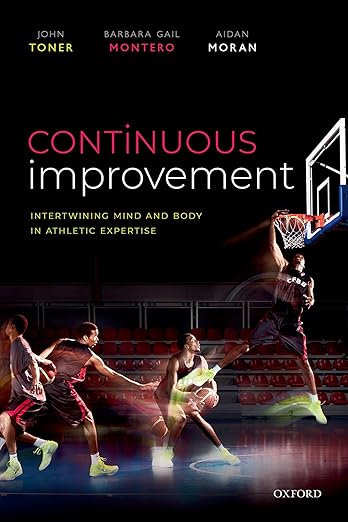

Continuous Improvement: Intertwining Mind and Body in Athletic Expertise (Paperback)
John Toner (Author)
- £20.00
-
£43.49 - £20.00
- Unit price
- per
Save £23.49
Please hurry! Only 2 left in stock
10 customers are viewing this product
Couldn't load pickup availability
Free Shipping
Free standard shipping on orders over £25
Same day dispatch.
Free Returns
Learn More.

How do great athletes defy the power law of practice, according to which improvements in skill eventually plateau?
Commentators and spectators alike are fascinated by how athletes such as Roger Federer, Tom Brady, and Serena Williams are capable both of moments of exquisite brilliance and of sustaining such excellence over a prolonged period. But what separates these great athletes from those who have achieved a certain level of expertise before finding that their performance has started to plateau? How is it possible for world-class athletes- athletes who seem to be at the top of their game- to keep improving?
To solve this puzzle, this book presents a theory of “continuous improvement” that explains how experts use conscious strategies to update and improve motor execution in training contexts and stabilise performance under highly pressurised conditions. It argues that expertise is characterised by an attentional flexibility involving the use of reflection, abstract thought, and bodily awareness; processes used by athletes to alter bodily routines in response to contextual demands. Drawing on theory and empirical findings from a wide range of disciplines including psychology, sociology, and cognitive science, the authors outline methodological approaches and practical strategies that can be used by coaches, researchers, and athletes to understand, improve, and maintain optimal levels of performance.
A fascinating exploration into the psychological and physical processes behind elite performance, this book will be an insightful read for students and academics of sport science, sport psychology, and kinesiology, as well as coaches, practitioners working with performers, athletes, or anyone with an interest in physical performance and improvement.
- Publisher: OUP Oxford
- ISBN: 9780198852261
- Pages: 240
- Weight: 0.368
John Toner is a lecturer in sports coaching and performance science at the University of Hull (UK). He has published widely on the role conscious processes play in facilitating 'continuous improvement' among skilled performers. Recent work on this topic has been published in Body & Society, Review of Philosophy and Psychology and the Psychology of Sport and Exercise.
Related Products
Example product title
- £20.00
-
£43.49 - £20.00
- Unit price
- per
Save £23.49
Example product title
- £20.00
-
£43.49 - £20.00
- Unit price
- per
Save £23.49
Example product title
- £20.00
-
£43.49 - £20.00
- Unit price
- per
Save £23.49
Example product title
- £20.00
-
£43.49 - £20.00
- Unit price
- per
Save £23.49
Example product title
- £20.00
-
£43.49 - £20.00
- Unit price
- per
Save £23.49
Example product title
- £20.00
-
£43.49 - £20.00
- Unit price
- per
Save £23.49
Example product title
- £20.00
-
£43.49 - £20.00
- Unit price
- per
Save £23.49
Example product title
- £20.00
-
£43.49 - £20.00
- Unit price
- per
Save £23.49
Example product title
- £20.00
-
£43.49 - £20.00
- Unit price
- per
Save £23.49
Example product title
- £20.00
-
£43.49 - £20.00
- Unit price
- per
Save £23.49
Recently Viewed Products
Example product title
- £20.00
-
£43.49 - £20.00
- Unit price
- per
Save £23.49
Example product title
- £20.00
-
£43.49 - £20.00
- Unit price
- per
Save £23.49
Example product title
- £20.00
-
£43.49 - £20.00
- Unit price
- per
Save £23.49
Example product title
- £20.00
-
£43.49 - £20.00
- Unit price
- per
Save £23.49
Example product title
- £20.00
-
£43.49 - £20.00
- Unit price
- per
Save £23.49
Example product title
- £20.00
-
£43.49 - £20.00
- Unit price
- per
Save £23.49
Example product title
- £20.00
-
£43.49 - £20.00
- Unit price
- per
Save £23.49
Example product title
- £20.00
-
£43.49 - £20.00
- Unit price
- per
Save £23.49
Example product title
- £20.00
-
£43.49 - £20.00
- Unit price
- per
Save £23.49
Example product title
- £20.00
-
£43.49 - £20.00
- Unit price
- per
Save £23.49
- Choosing a selection results in a full page refresh.